

पुजेट साउंड एनर्जी ने वाशिंगटन यूटिलिटीज एंड ट्रांसपोर्टेशन कमीशन (UTC) के साथ तीन साल की दर योजना का अनुरोध दायर किया है। यदि UTC द्वारा अनुमोदित किया जाता है, तो नई दरें 2027 की शुरुआत में प्रभावी होंगी
।यह दर योजना PSE को हमारे 1.7 मिलियन ग्राहकों को सुरक्षित और विश्वसनीय ऊर्जा प्रदान करना जारी रखने, ऊर्जा की बढ़ती मांग को पूरा करने और वाशिंगटन राज्य के महत्वाकांक्षी स्वच्छ ऊर्जा लक्ष्यों की दिशा में प्रगति जारी रखने में सक्षम बनाती है।
सामान्य दर का मामला क्या होता है?
सामान्य रेट केस एक औपचारिक विनियामक प्रक्रिया है, जहां पुजेट साउंड एनर्जी यूटीसी से ग्राहक दरों को समायोजित करने के लिए प्राधिकरण से अनुरोध करती है, जो आमतौर पर हर कुछ वर्षों में होती है। ग्राहकों को सुरक्षित, विश्वसनीय ऊर्जा सेवा के लिए उचित दरों का भुगतान सुनिश्चित करने के लिए आयोग PSE की लागत, निवेश और संचालन की व्यापक, स्वतंत्र समीक्षा करता
है।PSE सामान्य दर का मामला क्यों दाखिल कर रहा है?
दर योजना ग्राहकों को सुरक्षित और विश्वसनीय प्राकृतिक गैस और इलेक्ट्रिक सेवा प्रदान करना जारी रखने, ऊर्जा की बढ़ती मांग को पूरा करने के लिए पर्याप्त क्षमता सुनिश्चित करने और वाशिंगटन राज्य की स्वच्छ ऊर्जा आवश्यकताओं की दिशा में प्रगति जारी रखने के लिए PSE द्वारा किए जाने वाले पर्याप्त पूंजी निवेश को दर्शाती है।
महत्वपूर्ण बुनियादी ढाँचे को बनाए रखना और उनका आधुनिकीकरण करना
- अगले तीन वर्षों में, PSE को अपने गैस और इलेक्ट्रिक सिस्टम में $3.2 बिलियन से अधिक का निवेश करने की आवश्यकता है।
- उस निवेश का लगभग 70% इलेक्ट्रिक सिस्टम की ओर जाता है, जिस पर दबाव बढ़ रहा है। इलेक्ट्रिक सिस्टम निवेश सिस्टम की सुरक्षा और विश्वसनीयता पर केंद्रित है, ग्राहकों की बढ़ती मांग को पूरा करता है, और अधिक गंभीर मौसम और जंगल की आग के जोखिमों के खिलाफ PSE के बुनियादी ढांचे को सख्त करता है।
- उस निवेश का शेष हिस्सा — लगभग 30% — सिस्टम सुरक्षा को बरकरार रखता है और PSE के लगभग 900,000 प्राकृतिक गैस ग्राहकों के लिए मौजूदा बुनियादी ढांचे को बनाए रखता है।
स्वच्छ ऊर्जा में निवेश, क्षमता के लिए संसाधनों का उत्पादन
- राज्य के कानून के तहत, PSE को 2030-2033 तक एक प्रमुख मील का पत्थर पूरा करना होगा: नवीकरणीय या गैर-उत्सर्जक संसाधनों से 80% बिजली प्रदान करना। दर योजना में 11 नई उपयोगिता-स्तरीय नवीकरणीय ऊर्जा परियोजनाएं शामिल हैं- ये पवन, सौर और बैटरी परियोजनाएं, जो मुख्य रूप से वाशिंगटन और मोंटाना में स्थित हैं, जो अंतर को दूर करने में मदद करती हैं लेकिन राज्य की आवश्यकताओं को पूरी तरह से पूरा नहीं करती हैं।
- दर योजना में संघीय कर क्रेडिट में $529 मिलियन से अधिक शामिल हैं, जो नई पीढ़ी की परियोजनाओं की लागत को कम करके ग्राहकों को सीधे लाभान्वित करेंगे। संघीय कर कानून में बदलाव के कारण, ये क्रेडिट समाप्त हो रहे हैं, जिससे परियोजनाओं को जल्दी पूरा करने की तात्कालिकता पैदा हो रही है। इसके अलावा, ग्राहकों को हाल ही में पूरी हुई बीवर क्रीक विंड फैसिलिटी पर टैक्स क्रेडिट से $190 मिलियन का लाभ मिलेगा ।
- जब सूरज नहीं चमक रहा हो और हवा नहीं बह रही हो, तो विश्वसनीय सेवा का समर्थन करने और ग्राहक ऊर्जा की बढ़ती मांग को पूरा करने के लिए फाइलिंग में क्षमता संसाधन- बैटरी, गैस टर्बाइन और गैस उत्पादन भी शामिल हैं।
- ग्राहकों की मांग को पूरा करने और स्वच्छ ऊर्जा लक्ष्यों का अनुपालन करने के लिए बनाई जा रही सभी नई पीढ़ी के संसाधनों के लिए PSE की पूंजी खर्च योजना $3.6 बिलियन से अधिक है। परियोजना की इन लागतों की वसूली दशकों तक चलेगी ।
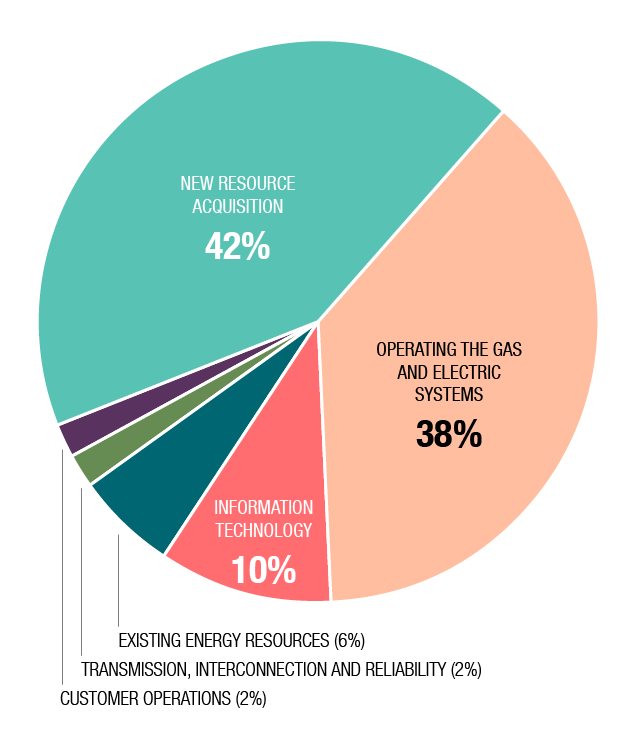
सुरक्षित, विश्वसनीय और स्वच्छ ऊर्जा प्रदान करने के लिए पूंजी निवेश (2027-2029)
-
और जानें
नए संसाधन अधिग्रहण: पूंजीगत व्यय स्वच्छ ऊर्जा रूपांतरण अधिनियम (CETA) के लक्ष्यों को पूरा करने के लिए नए पवन और सौर उत्पादन संयंत्रों, बैटरी और प्राकृतिक गैस उत्पादन के निर्माण पर केंद्रित है और ग्राहकों की ज़रूरतों के बढ़ने पर विश्वसनीय ऊर्जा आपूर्ति सुनिश्चित करता है। जनवरी 1, 2030 से शुरू होने वाली पहली चार साल की CETA अनुपालन अवधि के लिए ग्रीनहाउस गैस-न्यूट्रल बिजली प्रदान करने की आवश्यकता को पूरा करने और ग्राहकों के लिए दीर्घकालिक विश्वसनीयता और स्वच्छ ऊर्जा पहुंच का समर्थन करने के लिए PSE के लिए ये निवेश महत्वपूर्ण हैं। गैस और इलेक्ट्रिक सिस्टम का संचालन: पूंजी व्यय में इलेक्ट्रिक और गैस सिस्टम का उन्नयन और आधुनिकीकरण, केबल प्रतिस्थापन, सर्किट आधुनिकीकरण, स्वचालन, सबस्टेशन अपग्रेड और पुराने बुनियादी ढांचे का प्रतिस्थापन शामिल है। ये परियोजनाएं आउटेज को कम करती हैं, बहाली के समय को कम करती हैं, और तूफानों और अन्य खतरों के प्रति ग्रिड के लचीलेपन को मजबूत करती हैं, जिससे ग्राहकों को प्रतिदिन सुरक्षित, विश्वसनीय, उच्च गुणवत्ता वाली ऊर्जा सेवा मिलती है।सूचना प्रौद्योगिकी: पूंजीगत व्यय पुरानी तकनीक को संबोधित करते हैं और पीएसई के संचालन और ग्राहक सहायता में वृद्धि करते हैं। ये परियोजनाएँ उन प्रणालियों का आधुनिकीकरण और सुरक्षा करती हैं जो PSE के संचालन और ग्राहक सेवा का समर्थन करती हैं, साइबर सुरक्षा को बढ़ाती हैं, और डिजिटल कार्यस्थल उपकरणों को बेहतर बनाती हैं। पुरानी तकनीक को बदलकर, PSE यह सुनिश्चित करता है कि उसके सिस्टम मज़बूती से काम कर सकें, डेटा सुरक्षा बनाए रख सकें और गुणवत्तापूर्ण ग्राहक अनुभव प्रदान कर सकें।मौजूदा ऊर्जा संसाधन: पूंजीगत व्यय मौजूदा पीढ़ी की परिसंपत्तियों के रखरखाव, सुरक्षा और विश्वसनीयता का समर्थन करते हैं, जिसमें हाइड्रो, विंड और थर्मल प्लांट शामिल हैं। इस क्षेत्र की परियोजनाओं में बांध सुरक्षा उन्नयन, विफलताओं को रोकने के लिए नियमित रखरखाव और विनियामक अनुपालन शामिल हैं। ये निवेश लचीली ऊर्जा आपूर्ति बनाए रखने, परिचालन जोखिमों को कम करने और ग्राहकों को भरोसेमंद, तेजी से बढ़ती स्वच्छ ऊर्जा से लाभान्वित करने में मदद करते हैं।ट्रांसमिशन, इंटरकनेक्शन और विश्वसनीयता: PSE की दीर्घकालिक ट्रांसमिशन योजना, इंटरकनेक्शन, लचीलापन और विश्वसनीयता का समर्थन करने के लिए पूंजी व्यय। ग्राहक संचालन: पूंजीगत व्यय ग्राहक सहभागिता और सेवा क्षमताओं में रणनीतिक निवेश का समर्थन करता है, जिसमें छोटे और बड़े व्यवसायों के लिए विशेष ग्राहक सहायता में सुधार करना, वितरित ऊर्जा संसाधनों (डीईआर) जैसे कि सौर, भंडारण और प्रबंधित चार्जिंग, साथ ही पोल सेवाओं को सुविधाजनक बनाना शामिल है। इन निवेशों से कंपनी को ग्राहक सेवा में सुधार करने, विनियामक दायित्वों को पूरा करने और उन समुदायों में आर्थिक विकास में सहायता मिलेगी, जिनकी हम सेवा करते हैं।
ग्राहक के प्रभाव क्या हैं?
यदि UTC द्वारा अनुरोध को मंजूरी दे दी जाती है, तो प्रति माह 800 kWh का उपयोग करने वाले एक सामान्य आवासीय इलेक्ट्रिक ग्राहक को 2027 की शुरुआत में लगभग $28, 2028 में लगभग $7 और 2029 में लगभग $16 के मासिक बिल में वृद्धि दिखाई देगी। एक सामान्य प्राकृतिक गैस आवासीय ग्राहक जो प्रति माह 64 थर्म का उपयोग करता है, उसके मासिक बिल में 2027 की शुरुआत में लगभग $14, 2028 में लगभग $4 और 2029 में लगभग $5 की वृद्धि देखी जाएगी
।सेवा अनुसूची के अनुसार प्रस्तावित परिवर्तन:
इलेक्ट्रिक
| 2027 | 2028 | 2029 | ||
|---|---|---|---|---|
| शेड्यूल | RY1 | RY2 | RY3 | |
| रेजिडेंशियल | 7 (307) (327) | 16.75% | 3.76% | 8.81% |
| सेक वोल्ट जनरल एसवीसी | 08 (24) | 13.69% | 3.64% | 8.46% |
| सेक वोल्ट जनरल मेड डेम एसवीसी | 7A (11) (25) | 13.17% | 3.72% | 8.53% |
| सेक वोल्ट जनरल एलजी डेम एसवीसी | 12 (26) (26P) | 13.82% | 3.96% | 8.94% |
| सेक वोल्ट इरिग एंड पम्प एसवीसी | 29 | 12.35% | 3.90% | 8.74% |
| प्री वोल्ट जनरल एसवीसी | 10 (31) | 11.93% | 3.86% | 8.73% |
| प्रो वोल्ट इरिग एंड पम्प एसवीसी | 35 | बंद करने का प्रस्ताव | ||
| प्री वोल्ट इंटर इलैक्ट्रिक एसएच | 43 | 13.64% | 4.01% | 9.15% |
| हाई वोल्ट इंटर एसवीसी | 46 | बंद करने का प्रस्ताव | ||
| हाई वोल्ट जनरल एसवीसी | 49 | 6.28% | 3.99% | 8.50% |
| रिटेल व्हीलिंग | 448 - 459 | 4.73% | 0.00% | 0.00% |
| स्पेशल कॉन्ट्रैक्ट्स | SC | -12.49% | -2.04% | -3.06% |
| क्षेत्र और स्ट्रीट लाइटिंग | 03, 50-59 | 32.11% | 3.53% | 9.07% |
| परिवहन विद्युतीकरण | 558 | 31.56% | 3.48% | 8.93% |
गैस
| 2027 | 2028 | 2029 | ||
|---|---|---|---|---|
| शेड्यूल | RY1 | RY2 | RY3 | |
| रेजिडेंशियल | 23,53 | 13.32% | 3.04% | 3.47% |
| आवासीय गैस लाइट्स | 16 | 13.64% | 4.00% | 4.73% |
| वाणिज्यिक और औद्योगिक | 31 | 16.84% | 3.62% | 4.13% |
| बड़ा आयतन | 41 | 10.71% | 2.57% | 2.95% |
| इंटरप्टिबल | 85 | 7.17% | 1.71% | 2.06% |
| सीमित इंटरप्टिबल | 86 | 7.43% | 1.48% | 1.66% |
| नॉन-एक्सक्लूसिव इंटरप्टिबल | 87 | 6.56% | 1.81% | 1.68% |
| वाणिज्यिक और औद्योगिक परिवहन | 31T | बंद करने का प्रस्ताव | ||
| बड़ी मात्रा में परिवहन | 41T | 22.69% | 3.53% | 3.97% |
| इंटरप्टिबल ट्रांसपोर्टेशन | 85T | 20.24% | 4.10% | 4.53% |
| सीमित इंटरप्टिबल ट्रांसपोर्टेशन | 86T | 15.36% | 5.37% | 4.85% |
| गैर-विशिष्ट इंटरप्टिबल ट्रांसपोर्टेशन | 87T | 26.31% | 4.82% | 5.76% |
| एक्सक्लूसिव इंटरप्टिबल ट्रांसपोर्टेशन | 88T | 16.50% | -6.08% | 0.00% |
| कॉन्ट्रैक्ट्स | - | 5.17% | 13.52% | 15.52% |
लागत कम रखने के लिए PSE क्या कर रहा है?
हम समझते हैं कि अधिक बिल परिवारों और स्थानीय व्यवसायों पर पड़ते हैं और हमारे ग्राहक आवश्यक सेवा प्रदान करने के लिए हम पर निर्भर हैं। हम इसे गंभीरता से लेते हैं और लागत को यथासंभव कम रखने की अपनी ज़िम्मेदारी समझते हैं.
हम ऐसा इन तरीकों से करते हैं:
- हमारी परिचालन लागतों का प्रबंधन करना: उसी क्षेत्र में और तुलनीय आकार की उपयोगिताओं की तुलना में PSE का प्रति ग्राहक कम परिचालन व्यय होता है
- ग्राहक बिल के प्रभावों को कम करने के लिए दशकों में बड़ी पूंजी परियोजनाओं की लागत को फैलाना
- बिजली की लागत को कम करने के लिए थोक ऊर्जा बाजारों में भाग लेना
इसके अलावा, हम लागत को कम करने के लिए टैक्स क्रेडिट का लाभ उठाना चाहते हैं। रेट प्लान में फ़ेडरल टैक्स क्रेडिट में $529 मिलियन शामिल हैं, जो नई पीढ़ी की परियोजनाओं की लागत को कम करके ग्राहकों को सीधे लाभान्वित करेंगे। संघीय कर कानून में बदलाव के कारण, ये क्रेडिट समाप्त हो रहे हैं, जिससे परियोजनाओं को जल्दी पूरा करने की तात्कालिकता पैदा हो रही है। इसके अलावा, ग्राहकों को हाल ही में पूरी हुई बीवर क्रीक विंड फैसिलिटी पर टैक्स क्रेडिट से $190 मिलियन का लाभ मिलेगा
।मैं अपने बिल का भुगतान करने के लिए संघर्ष कर रहा हूं। मैं क्या कर सकता हूं?
हम यहां मदद करने के लिए हैं। हमारे पास ऐसे कार्यक्रम हैं जो ग्राहकों को पैसे और ऊर्जा बचाने में मदद करते हैं, और जो ग्राहक अपनी जरूरतों को पूरा करने के लिए संघर्ष कर रहे हैं, उनके लिए बिल सहायता प्रदान करते हैं.
ज़्यादा जानें और pse.com/gethelp पर जाकर शुरू करें.
मैं और कैसे सीख सकता हूं और इसमें शामिल हो सकता हूं?
पूरे मामले के दस्तावेज़ देखने के लिए UTC वेबसाइट पर docket 260005 और docket 260006 पर जाएं।
टिप्पणियां यूटीसी को उनके सार्वजनिक टिप्पणी फ़ॉर्म के माध्यम से सबमिट की जा सकती हैं।