


Glacier Battery Energy Storage System (BESS)
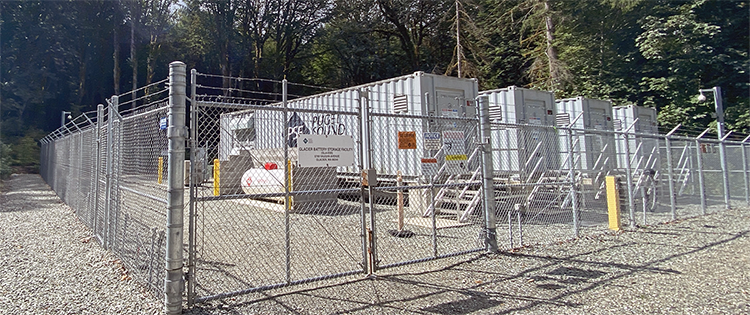
In 2016, PSE installed a 2‑megawatt, 4.4‑megawatt‑hour battery energy storage system (BESS) next to the Glacier substation in Glacier, WA. The system consists of lithium‑ion batteries stored in four shipping containers.
We built the Glacier BESS as a demonstration project to learn how battery technology could support a small, remote community that experiences frequent outages. We planned to operate this project for about 10 years.
Why We Built the Glacier Battery
Through the Glacier BESS demonstration project, we wanted to test and learn how batteries could improve electric service in three ways:
- Provide short‑term backup power to Glacier’s downtown area during outages
- Reduce system load during periods of high electricity demand
- Help balance energy supply and demand, especially when integrating renewable energy such as wind and solar
What We Learned
The Glacier BESS provided backup power to 62 customers in Glacier’s downtown area during outages. It also reduced system load and supported grid balancing needs.
This demonstration project gave us valuable experience with the operations, performance, and challenges of battery energy storage systems. This knowledge will help guide future projects.
What’s Happening Now
The Glacier BESS is not operating. After evaluating several options, we determined that removing the system in phases is the safest and most effective solution for the community and the site.
We are working with industry experts to follow best practices during the BESS removal, including recycling the battery modules. We will provide notification and information to the community before this work begins.
The Glacier Location
Glacier is an unincorporated town of about 300 people in eastern Whatcom County, WA near Mt. Baker. One 55-kv radial transmission line* serves the town. The surrounding forested and rugged terrain can cause outages and longer restoration times. We appreciate that the community of Glacier could serve as a test location to help PSE understand how more remote, mountain communities experience outages and how we can advance work for increased reliability.
Project Testing and Use
In 2017 and 2018, PSE and Pacific Northwest National Laboratory tested the battery during six planned power outages. In 2019, the battery powered downtown Glacier for the first time during an unplanned outage, providing electricity for about four hours while crews repaired a damaged power line. The battery continued to support the Glacier community for several more years during unplanned outages.
Funding
The Washington State Department of Commerce provided a $3.8 million Smart Grid grant, and PSE invested $7.4 million in the Glacier BESS demonstration project.
*A radial line is a single electrical path that has one electric power source and power flowing in one direction, from one end to another end. Radial distribution lines are more vulnerable to reliability issues because they have no backup energy source during an outage.
What is a megawatt and a megawatt-hour?
Megawatt: a measure of energy that indicates how fast energy is produced or used.
Megawatt-hour: a measure of how much energy is used over time.
The 4.4 megawatt-hours for the Glacier BESS means it could power about 60 customers for up to nine hours, when fully charged