


Solar for home
Interested in solar energy? Start by learning how solar works, what to consider before investing in a system, and the different ways PSE customers can participate in and support solar energy.
How solar panels work
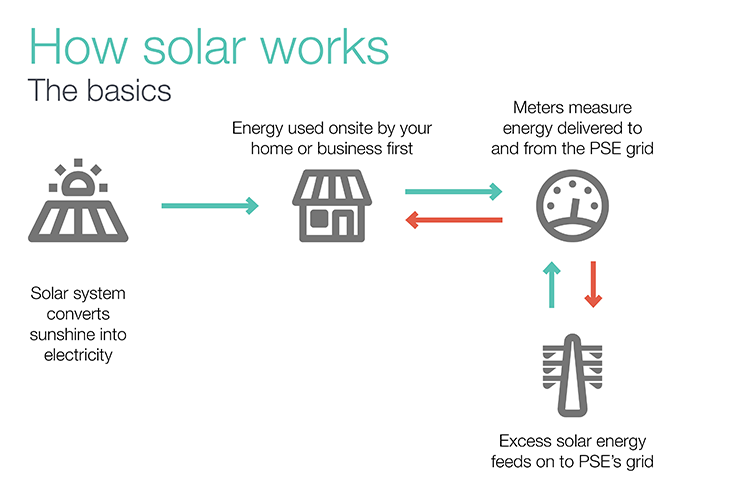
Solar panels convert sunlight into electricity that can be used throughout your home. When sunlight reaches the solar cells inside a panel, it triggers a process that creates an electrical current, producing energy for lights, appliances, and other everyday needs.
Solar production varies throughout the day and by season, with more energy produced in sunny, summer months and less during shorter winter days. Even in the Pacific Northwest, solar panels continue to generate electricity year-round.
Your solar and the electric grid
A grid connected solar array allows electricity to flow in two directions. When your home needs more electricity than your solar panels are producing, power is supplied from the grid. When your system generates more electricity than your home uses, excess energy can be exported to the grid.
Batteries are not required, but can be paired with solar energy to provide additional value. Adding batteries to a grid tied solar array makes it possible to possible to power your home from solar energy during a PSE outage. Batteries can also allow you to shift when you use or export your solar energy, to reduce reliance on the delivery of energy from PSE.
Whether solar panels are installed on your roof or as part of a shared solar project, the principle is similar: solar energy offsets energy demand where and when it is generated, or when exceeding onsite loads, is exported to the grid.
-
Interconnection: Bridge your solar system with the grid
Interconnectionis the process of safely connecting your solar and/or battery to your home’s electrical system and the grid. Before a solar system can operate with the electric grid, it must be interconnected according to standards provided in PSE’s Rate Schedule 152 for Interconnection.
The interconnection application process depends on the type of project you're installing. Solar arrays, including solar paired with battery storage, that are eligible for PSE’s net metering program follow the simplified process outlined in PSE’s Rate Schedule 150 for Net Metering.
Visit the net metering page for interconnection details, eligibility requirements, and application instructions.
-
Is solar right for you?
Installing solar can be a great option for some homeowners, but it might not be the right option. These three steps will help you assess your home's suitability, understand the costs and benefits, and decide whether solar aligns with your energy goals.
Step 1: Estimate your solar potential
- Use PSE's free personalized solar energy calculator to explore how much energy a solar system could produce at your home, estimate costs and savings, and compare different solar scenarios.
Step 2: Consider energy efficiency improvements
- Before investing in solar, consider efficiency improvements that can reduce energy use and help lower the size and cost of the system you need. A qualified solar installer can help evaluate your home's solar potential and determine how solar and energy efficiency improvements can work together to maximize savings.
Step 3: Find a qualified installer
- Choosing an experienced solar installer is an important part of the process. PSE's Recommended Energy Professionals (REP) network can help connect you with qualified solar installers serving your area. PSE strongly recommends you get multiple bids and select an experienced installer.
PSE is not affiliated with or partnered with any door-to-door solar sales companies, contractors, or installers. Be cautious of anyone claiming to represent PSE or suggesting that a solar purchase is required or approved by PSE. Taking the time to research your options and choose a qualified installer can help ensure a successful solar project and avoid unexpected costs or performance issues.
Get value from solar energy
Depending on which solar program you choose, you may be able to receive bill credits or other benefits tied to the energy generated by a solar system.
Customer-Owned Solar Systems

Net Metering – Limited to up to 100 kW systems
Net metering allows eligible customers with their own solar systems to receive bill credits for excess electricity exported to the grid. These credits can help offset the cost of electricity used when your system isn't producing enough energy to meet your home's needs.
Shared Solar Systems

Community Solar
Participate in a larger, centrally located solar project without installing your own.

Multi-Occupant Solar
Benefit from a shared solar array serving a multi-unit property.
-
Solar arrays in a power outage
For safety reasons, most solar energy systems are designed to automatically shut down during a grid outage. This helps protect utility crews and emergency responders who may be working on power lines.
As a result, if the electric grid goes down, your solar panels will typically stop producing electricity and will not power your home or business, even during daylight hours.
If your system includes battery storage or other backup power equipment designed to operate independently from the grid, you may be able to continue powering some or all of your property during an outage. Contact your solar installer to learn more about the capabilities of your specific system.
-
Moved in?
If you recently purchased or moved into a home or business with an existing solar energy system, you may have questions about how the system works, account setup, incentive programs, billing, and what steps—if any—you need to take with PSE. Visit our Solar FAQs for answers to common questions.

Find out the costs and savings of a solar and battery home installation based on your actual energy use.

Have questions about PSE's solar programs and how to get started? We're here to help