


Commercial Midstream HVAC Program
The PSE Midstream HVAC Program partners with distributors to increase sales of high-efficiency HVAC equipment by reducing upfront costs through rebates. This distributor-focused program also promotes an increased stock of efficient systems, ensuring they are readily available to customers in emergency replacement situations.
Qualifying Equipment
SEER2/HSPF2 rated air-cooled heat pumps (<5.4 tons)
Limit 1 unit per residential retrofit project. Limit 2 per residential new construction project.
| Equipment type |
Sub type |
Project Type | TIER | SEER2 | HSPF2 | Total Rebate ($ PER UNIT) |
|---|---|---|---|---|---|---|
| Air-source heat pumps | Mini-/multi-split, split, or packaged | Retrofit only | 1 | 15.2 | 8.1 | $300 |
| Retrofit or new construction | 2 | 15.2 | 8.5 | $400 | ||
| 3 | 16 | 9.5 | $600 |
* Customers installing qualifying heat pump systems must have a valid and/or active electric service account with Puget Sound Energy.
PSE no longer offers direct customer incentives for the replacement of large commercial HVAC and commercial natural gas domestic water-heating equipment. We’ve moved our efforts to education and market transformation within the supply chain. We work directly with distributors to make sure high-efficiency equipment is available locally when you need it. Equipment not eligible for a custom retrofit grant includes: air-cooled air conditioners; water-cooled and evaporative air conditioners; air-cooled heat pumps (greater than 5.4 tons); water-cooled heat pumps; condensing storage and tankless domestic water heaters; and condensing domestic hot water boilers.

Are you a distributor or contractor? Learn more about PSE’s Midstream program. Contact Us at psemidstreamteam@icf.com

Request a PSE Recommended Energy Professional (REP) to complete your energy efficient improvement upgrade.
-
What is SEER(2)? HSPF(2)?
Seasonal Energy Efficiency Ratio (SEER/SEER2) is most commonly used to measure the efficiency of a central air conditioner. The higher the SEER, the more efficient the system. SEER measures how efficiently a cooling system will operate over an entire season. In technical terms, SEER is a measure of the total cooling of a central air conditioner or heat pump (in Btu) during the normal cooling season as compared to the total electric energy input (in watt-hours) consumed during the same period. This measure of efficiency is specific to the temperate climate in the middle of the U.S. Recently testing procedures have been refined to introduce the SEER2 rating.
Heat Seasonal Performance Factor (HSPF/HSPF2) is the most commonly used measure of a heat pumps heating efficiency. The higher the HSPF, the more efficient the heat pump. In technical terms, HSPF represents the total heating output of a heat pump (including supplementary electric heat) during the normal heating season (in Btu) as compared to the total electricity consumed (in watt-hours) during the same period. Recently testing procedures have been refined to introduce the HSPF2 rating.
Source: www.energystar.gov
-
Ductless heat pump facts
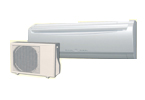
A ductless heat pump is a highly energy-efficient heating and cooling system that runs without the energy losses associated with the ductwork of a central forced-air system. As it doesn't require ducts to carry conditioned air, it is the preferred system for additions to your home, newer homes that only require a small space conditioning system or areas of your home that you wish to condition in zones.
Other benefits include:
- Ductless heat pumps use between 25 and 50 percent less energy to heat your home
- An ultra-quiet fan evenly circulates air, eliminating hot and cold spots
- Installation in your home is inexpensive, simple and quick, which makes for little or no disruption
- Ductless systems come standard with air conditioning, so you can get rid of window units
-
Air-source heat pump facts
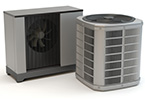
An air-source heat pump is a high-efficiency heating and cooling system that can deliver between one-and-a-half and three times more heat energy to a home than the electrical energy it uses.
A less efficient panel of electric coils kicks in to provide additional indoor heating when outdoor temperatures fall below 40 degrees Fahrenheit, so it's generally not a preferred system for regions with sub-freezing winter temperatures.

TIP: The installation of a heat pump or air conditioner can sometimes cause a fluctuation in the power supply when your equipment starts. This may result in a visible flicker of the lighting in your home or your neighbors' homes.
To ensure that your heat pump installation does not have a negative effect on power quality, it's important to discuss this issue with your contractor. For additional assistance, call a PSE Customer Construction Services specialist at 1-888-321-7779.