

Puget Sound Energy đã nộp yêu cầu kế hoạch lãi suất ba năm với Ủy ban Tiện ích và Giao thông Washington (UTC). Nếu được UTC chấp thuận, tỷ lệ mới sẽ có hiệu lực vào đầu năm 2027
.Kế hoạch tỷ giá này cho phép PSE tiếp tục cung cấp năng lượng an toàn và đáng tin cậy cho 1,7 triệu khách hàng của chúng tôi, đáp ứng nhu cầu năng lượng ngày càng tăng và tiếp tục đạt được tiến bộ hướng tới các mục tiêu năng lượng sạch đầy tham vọng của bang Washington.
Trường hợp tỷ lệ chung là gì?
Trường hợp tỷ giá chung là một quy trình quy định chính thức trong đó Puget Sound Energy yêu cầu thẩm quyền từ UTC để điều chỉnh tỷ giá của khách hàng, thường xảy ra vài năm một lần. Ủy ban tiến hành đánh giá toàn diện, độc lập về chi phí, đầu tư và hoạt động của PSE để đảm bảo khách hàng trả mức giá hợp lý cho dịch vụ năng lượng an toàn, đáng tin cậy
.Tại sao PSE nộp đơn kiện tỷ giá chung?
Kế hoạch lãi suất phản ánh các khoản đầu tư vốn đáng kể mà PSE phải thực hiện để tiếp tục cung cấp dịch vụ điện và khí đốt tự nhiên an toàn và đáng tin cậy cho khách hàng, đảm bảo đủ năng lực để đáp ứng nhu cầu năng lượng ngày càng tăng và tiếp tục đạt được tiến bộ đối với các yêu cầu năng lượng sạch của bang Washington.
Duy trì và hiện đại hóa cơ sở hạ tầng quan trọng
- Trong ba năm tới, PSE cần đầu tư hơn 3,2 tỷ đô la vào hệ thống khí đốt và điện của mình.
- Khoảng 70% khoản đầu tư đó dành cho hệ thống điện, vốn đang bị căng thẳng ngày càng tăng. Các khoản đầu tư vào hệ thống điện tập trung vào độ an toàn và độ tin cậy của hệ thống, đáp ứng nhu cầu ngày càng tăng của khách hàng và tăng cường cơ sở hạ tầng của PSE trước các rủi ro thời tiết khắc nghiệt và cháy rừng .
- Phần còn lại của khoản đầu tư đó - khoảng 30% - bảo vệ an toàn hệ thống và duy trì cơ sở hạ tầng hiện tại cho gần 900.000 khách hàng khí đốt tự nhiên của PSE.
Đầu tư vào năng lượng sạch, tạo nguồn lực cho năng lực
- Theo luật tiểu bang, PSE phải đạt được một cột mốc quan trọng vào năm 2030-2033: cung cấp 80% điện từ các nguồn tái tạo hoặc không phát thải. Kế hoạch giá bao gồm 11 dự án năng lượng tái tạo quy mô tiện ích mới - các dự án gió, mặt trời và pin này, chủ yếu nằm ở Washington và Montana, giúp thu hẹp khoảng cách nhưng không đáp ứng hoàn toàn các yêu cầu của tiểu bang .
- Bao gồm trong gói cước là hơn 529 triệu đô la tín dụng thuế liên bang sẽ trực tiếp mang lại lợi ích cho khách hàng bằng cách giảm chi phí cho các dự án thế hệ mới. Do những thay đổi trong luật thuế liên bang, các khoản tín dụng này đang hết hạn, tạo ra sự cấp bách để hoàn thành các dự án một cách nhanh chóng. Ngoài ra, khách hàng sẽ nhận được lợi ích 190 triệu đô la từ các khoản tín dụng thuế đối với Cơ sở Gió Beaver Creek đã hoàn thành gần đây .
- Hồ sơ cũng bao gồm các nguồn lực công suất - pin, tuabin khí và phát điện khí - để hỗ trợ dịch vụ đáng tin cậy khi mặt trời không chiếu sáng và gió không thổi, và để đáp ứng nhu cầu năng lượng ngày càng tăng của khách hàng. Kế
- hoạch chi tiêu vốn của PSE cho tất cả các nguồn lực thế hệ mới đang được xây dựng để đáp ứng nhu cầu của khách hàng và tuân thủ các mục tiêu năng lượng sạch lên tới hơn 3,6 tỷ đô la. Việc thu hồi các chi phí dự án này sẽ được trải rộng trong nhiều thập kỷ.
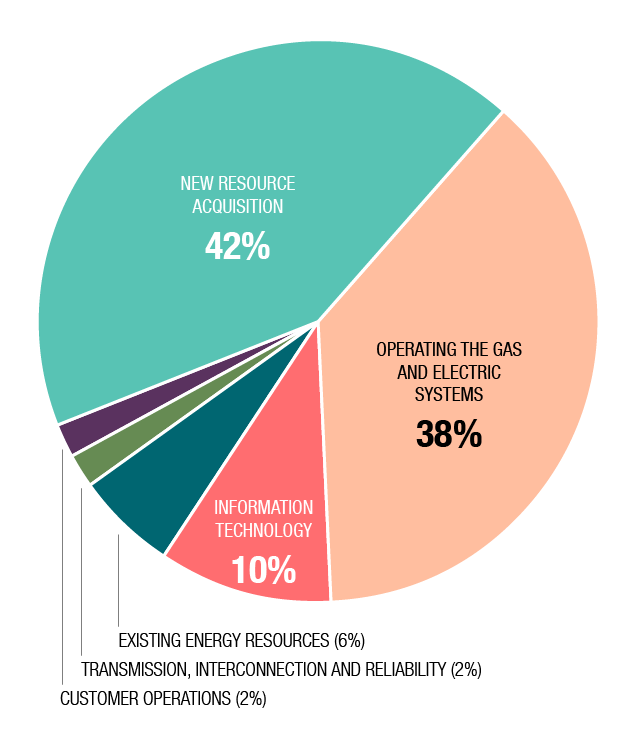
Đầu tư vốn để cung cấp năng lượng an toàn, đáng tin cậy và sạch hơn (2027-2029)
-
Tìm hiểu thêm
Mua lại tài nguyên mới: Chi tiêu vốn tập trung vào việc xây dựng các nhà máy phát điện gió và mặt trời mới, pin và phát điện khí tự nhiên để đáp ứng các mục tiêu của Đạo luật Chuyển đổi Năng lượng Sạch (CETA) và đảm bảo cung cấp năng lượng đáng tin cậy khi nhu cầu của khách hàng tăng lên. Những khoản đầu tư này rất quan trọng để PSE đáp ứng yêu cầu cung cấp điện trung hòa khí nhà kính trong giai đoạn tuân thủ CETA bốn năm đầu tiên, bắt đầu từ ngày 1 tháng 1 năm 2030, và để hỗ trợ độ tin cậy lâu dài và tiếp cận năng lượng sạch cho khách hàng. Vận hành hệ thống khí đốt và điện: Chi tiêu vốn bao gồm nâng cấp và hiện đại hóa hệ thống điện và khí đốt, thay thế cáp, hiện đại hóa mạch điện, tự động hóa, nâng cấp trạm biến áp và thay thế cơ sở hạ tầng cũ kỹ. Các dự án này làm giảm sự cố mất điện, rút ngắn thời gian phục hồi và tăng cường khả năng phục hồi của lưới điện trước các cơn bão và các mối đe dọa khác, đảm bảo khách hàng nhận được dịch vụ năng lượng an toàn, đáng tin cậy, chất lượng cao hàng ngày .Công nghệ thông tin: Chi tiêu vốn giải quyết công nghệ lỗi thời và tăng cường hoạt động và hỗ trợ khách hàng của PSE. Các dự án này hiện đại hóa và bảo vệ các hệ thống hỗ trợ hoạt động và dịch vụ khách hàng của PSE, tăng cường an ninh mạng và cải thiện các công cụ nơi làm việc kỹ thuật số. Bằng cách thay thế công nghệ lỗi thời, PSE đảm bảo các hệ thống của mình có thể hoạt động đáng tin cậy, duy trì bảo mật dữ liệu và mang lại trải nghiệm khách hàng chất lượng .Nguồn năng lượng hiện có: Chi tiêu vốn hỗ trợ việc bảo trì liên tục, an toàn và độ tin cậy của các tài sản phát điện hiện có, bao gồm các nhà máy thủy điện, gió và nhiệt. Các dự án trong lĩnh vực này bao gồm nâng cấp an toàn đập, bảo trì định kỳ để ngăn ngừa sự cố và tuân thủ quy định. Những khoản đầu tư này giúp duy trì nguồn cung cấp năng lượng linh hoạt, giảm rủi ro hoạt động và đảm bảo khách hàng được hưởng lợi từ năng lượng đáng tin cậy, ngày càng sạch .Truyền tải, kết nối và độ tin cậy: Chi tiêu vốn để hỗ trợ lập kế hoạch truyền tải dài hạn, kết nối, khả năng phục hồi và độ tin cậy của PSE. Hoạt động của khách hàng: Chi tiêu vốn hỗ trợ các khoản đầu tư chiến lược vào khả năng tương tác và dịch vụ của khách hàng, bao gồm cải thiện hỗ trợ khách hàng chuyên biệt cho các doanh nghiệp nhỏ và lớn, tạo điều kiện cho Tài nguyên Năng lượng Phân tán (DER) như năng lượng mặt trời, lưu trữ và sạc được quản lý, cũng như các dịch vụ cực, v.v. Những khoản đầu tư này sẽ giúp công ty cải thiện dịch vụ khách hàng, đáp ứng các nghĩa vụ pháp lý và hỗ trợ phát triển kinh tế trong các cộng đồng mà chúng tôi phục vụ.
Tác động của khách hàng là gì?
Nếu yêu cầu được UTC chấp thuận, một khách hàng điện dân dụng điển hình sử dụng 800 kWh mỗi tháng sẽ thấy hóa đơn hàng tháng tăng từ đầu năm 2027 khoảng 28 đô la, khoảng 7 đô la vào năm 2028 và gần 16 đô la vào năm 2029. Một khách hàng dân cư sử dụng khí đốt tự nhiên điển hình sử dụng 64 nhiệt mỗi tháng sẽ thấy hóa đơn hàng tháng tăng khoảng 14 đô la vào đầu năm 2027, khoảng 4 đô la vào năm 2028 và gần 5 đô la vào năm 2029
.Đề xuất thay đổi theo lịch trình dịch vụ:
Điện
| 2027 | 2028 | 2029 | ||
|---|---|---|---|---|
| Lịch trình | RY1 | RY2 | RY3 | |
| Khu dân cư | 7 (307) (327) | 16,75% | 3.76% | 8.81% |
| Sec Volt Gen Svc | 08 (24) | 13.69% | 3.64% | 8.46% |
| Sec Volt Gen Với Họ Svc | 7A (11) (25) | 13.17% | 3.72% | 8.53% |
| Sec Volt Gen Lg Dem Svc | 12 (26) (26P) | 13.82% | 3.96% | 8.94% |
| Sec Volt Irrig & Bơm Svc | 29 | 12,35% | 3.90% | 8.74% |
| About Volt Gen Svc | 10 (31) | 11.93% | 3.86% | 8.73% |
| Pri Volt Irrig & Pump Svc | 35 | Đề xuất đóng | ||
| About Volt Intr Elec Sch | 43 | 13.64% | 4,01% | 9.15% |
| Điện áp cao Intr Svc | 46 | Đề xuất đóng | ||
| High Volt Gen Svc | 49 | 6,28% | 3.99% | 8.50% |
| Xe lăn bán lẻ | 448 - 459 | 4.73% | 0,00% | 0,00% |
| Hợp đồng đặc biệt | SC | -12.49% | -2.04% | -3.06% |
| Chiếu sáng khu vực & đường phố | 03, 50-59 | 32.11% | 3,53% | 9.07% |
| Điện khí hóa giao thông | 558 | 31.56% | 3.48% | 8.93% |
Khí
| 2027 | 2028 | 2029 | ||
|---|---|---|---|---|
| Lịch trình | RY1 | RY2 | RY3 | |
| Khu dân cư | 23.53 | 13.32% | 3,04% | 3.47% |
| Đèn khí dân dụng | 16 | 13.64% | 4,00% | 4.73% |
| Thương mại & Công nghiệp | 31 | 16,84% | 3.62% | 4.13% |
| Khối lượng lớn | 41 | 10.71% | 2.57% | 2,95% |
| Có thể ngắt | 85 | 7.17% | 1.71% | 2,06% |
| Có giới hạn ngắt | 86 | 7.43% | 1,48% | 1,66% |
| Ngắt không độc quyền | 87 | 6,56% | 1,81% | 1,68% |
| Vận tải thương mại và công nghiệp | 31T | Đề xuất đóng cửa | ||
| Vận chuyển khối lượng lớn | 41T | 22.69% | 3,53% | 3.97% |
| Vận chuyển bị gián đoạn | 85T | 20.24% | 4.10% | 4.53% |
| Vận chuyển gián đoạn hạn chế | 86T | 15,36% | 5.37% | 4.85% |
| Vận chuyển gián đoạn không độc quyền | 87T | 26.31% | 4.82% | 5.76% |
| Vận chuyển gián đoạn độc quyền | 88T | 16,50% | -6.08% | 0,00% |
| Hợp đồng | - | 5.17% | 13,52% | 15,52% |
PSE đang làm gì để giảm chi phí?
Chúng tôi nhận ra sự căng thẳng mà các hóa đơn cao hơn gây ra cho các gia đình và doanh nghiệp địa phương và khách hàng của chúng tôi phụ thuộc vào chúng tôi để cung cấp một dịch vụ thiết yếu. Chúng tôi coi trọng điều đó và nhận ra trách nhiệm của mình là giữ chi phí thấp nhất có thể.
Chúng tôi làm điều đó thông qua:
- Quản lý chi phí hoạt động của chúng tôi: PSE có chi phí hoạt động cho mỗi khách hàng thấp hơn so với các tiện ích trong cùng khu vực và có quy mô tương đương
- Phân bổ chi phí của các dự án vốn lớn qua nhiều thập kỷ để giảm tác động đến hóa đơn khách hàng
- Tham gia thị trường năng lượng bán buôn để giảm chi phí điện
- Mở rộng hiệu quả năng lượng và các chương trình giảm nhu cầu hệ thống, bù đắp nhu cầu mua điện để phục vụ khách hàng, đặc biệt là khi nhu cầu tăng vọt và giá cả cao
Ngoài ra, chúng tôi tìm cách tận dụng các khoản tín dụng thuế để giảm chi phí. Kế hoạch thuế bao gồm 529 triệu đô la tín dụng thuế liên bang sẽ trực tiếp mang lại lợi ích cho khách hàng bằng cách giảm chi phí cho các dự án thế hệ mới. Do những thay đổi trong luật thuế liên bang, các khoản tín dụng này đang hết hạn, tạo ra sự cấp bách để hoàn thành các dự án một cách nhanh chóng. Ngoài ra, khách hàng sẽ nhận được lợi ích 190 triệu đô la từ các khoản tín dụng thuế đối với Cơ sở Gió Beaver Creek đã hoàn thành gần đây
.Tôi đang vật lộn để thanh toán hóa đơn của mình. Tôi có thể làm gì?
Chúng tôi ở đây để giúp đỡ. Chúng tôi có các chương trình giúp khách hàng tiết kiệm tiền và năng lượng, đồng thời hỗ trợ hóa đơn cho những khách hàng đang gặp khó khăn trong việc kiếm sống.
Tìm hiểu thêm và bắt đầu tại pse.com/ gethelp.
Làm thế nào tôi có thể tìm hiểu thêm và tham gia?
Để xem đầy đủ các tài liệu trường hợp, hãy truy cập docket 260005 và docket 26000 6 trên trang web UTC. Nhận xét có thể được gửi đến UTC thông qua biểu mẫu bình luận công khai của họ.