


Multi-Occupant Solar
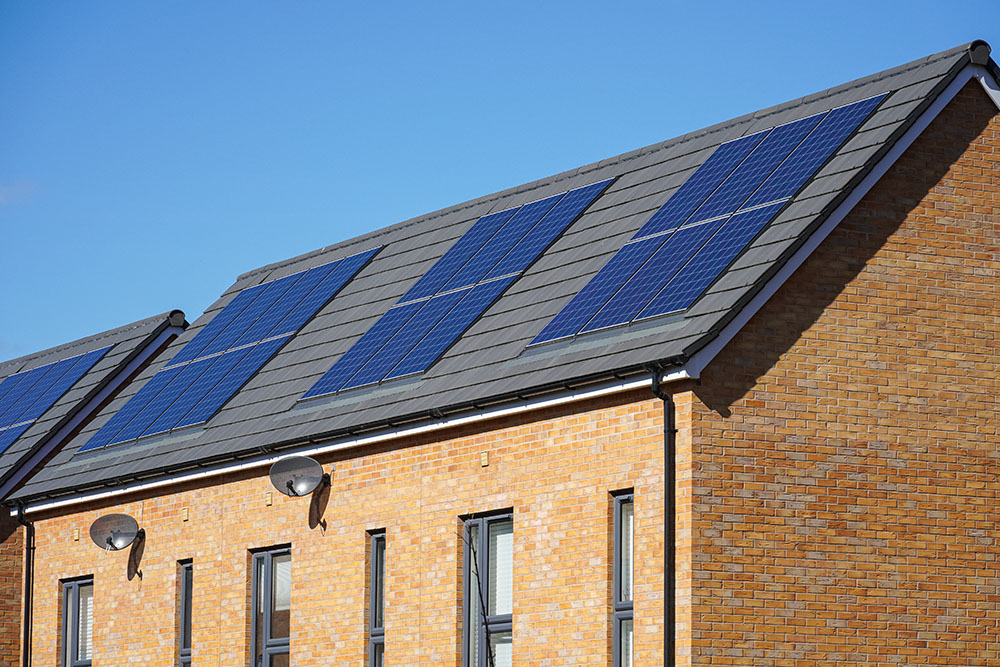
Share solar across multiple accounts on your property
Multi-Occupant Solar enables property owners to install a single solar energy system and distribute its benefits across multiple electric accounts located on the same, contiguous property or Tribal land.
By allowing solar generation to be shared among residents, tenants, common-area loads, and property owners, Multi-Occupant Solar can help maximize the value of a solar investment while lowering overall energy costs. It also offers an opportunity to deliver direct energy savings to residents and tenants while supporting long-term affordability and sustainability goals.
Unlike traditional solar arrays that offset usage for a single account, Multi-Occupant Solar provides a flexible way to share the benefits of locally generated renewable energy across multiple eligible accounts.
How Multi-Occupant Solar works
Multi-Occupant Solar allows multiple electric accounts on the same or a contiguous property to share a single solar array up to 1000 kW AC in size. For Tribal entities, the allocation can be shared across all Tribal land.
The solar array generates electricity that is first used on-site, typically by a house meter serving common areas, shared facilities or other property needs. Any excess generation is exported to the electric grid.
When electricity is exported, allocated customer accounts receive financial bill credits based on their assigned share of the project.
-
Types of customers
Primary customer
The primary customer owns or manages the solar project and is responsible for allocating exported energy credits among allocated accounts.
Examples may include:- Property owners or managers
- Condominium or homeowners' associations
- Manufactured home park owners
- Tribal entities
- Agricultural property owners
Allocated Customer
An allocated customer is a participating electric account that receives a share of the project's exported energy credits on their monthly bill.
Allocated customers are often:
- Residents
- Condominium owners
- Other house accounts
- Other tenants or occupants served by the property
Currently, exported solar generation is credited at $0.067 per kilowatt-hour (kWh).
-
How crediting works
- The solar array generates electricity
- Electricity is used first by the property's common-area meter or shared facilities
- Excess electricity is exported to the grid
- Exported generation earns credits, which are automatically distributed to allocated customer
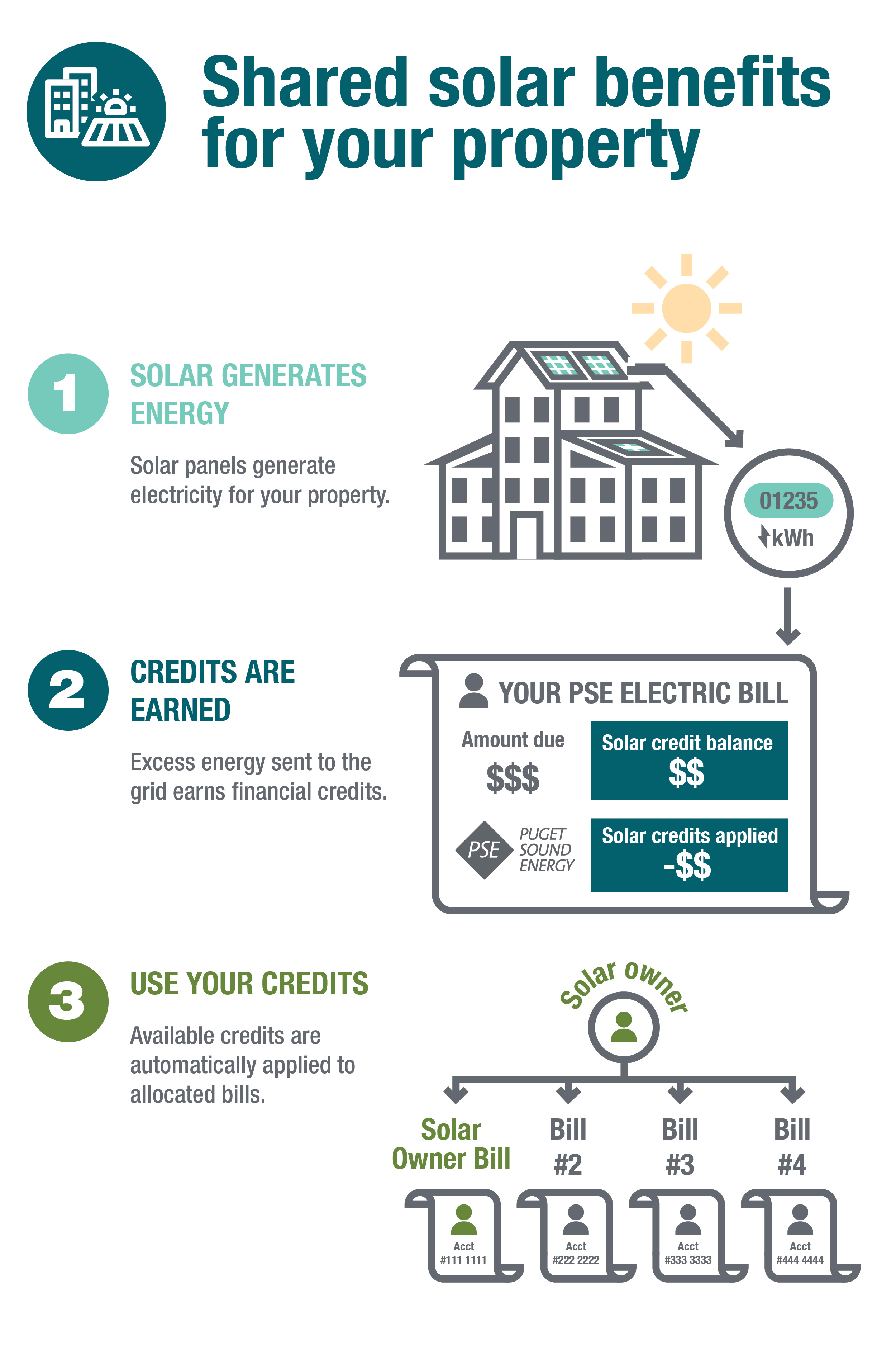
To participate, the solar array must be located on the same property as participating in customer accounts or on a contiguous property. For projects owned by Tribal Nations, allocated customers may be located anywhere on Tribal land.
-
Eligibility requirements
Multi-Occupant Solar is available to customers on residential and commercial electric service Rate Schedules 7-49. It is not currently available in combination with:
- Time of Use Rate Schedules 307, 327 (Limit only affects Primary customer)
- Non-Communicating Meter Service Schedule 171
Solar systems can be up to 1000 kW AC of installed capacity.
Before participating in Multi-Occupant Solar, your system must be reviewed and interconnected with PSE through the Schedule 152 Interconnection process.
Visit the Interconnection page for details, eligibility requirements, and application instructions.
-
Enhanced Incentives for affordable housing providers and Tribes
Affordable housing providers and Tribal entities may qualify for Enhanced Incentives that help reduce the upfront cost of installing a Multi-Occupant Solar project.
Eligible projects can receive funding of up to 100% of project costs or $250,000, including up to $50,000 for interconnection costs.
Applications are reviewed monthly and prioritized based on the percentage of project benefits that will be passed through to low-income households or Tribal members.
Previous recipients of solar grants or incentives are welcome to apply.
-
Incentive Eligibility Requirements
To qualify, projects must:
- Have at least 50% of units occupied by low-income households or Tribal members
- Be located within PSE's electric service area
- Be owned by the applicant or have at least five years remaining on the site lease
- Participate in the Multi-Occupant Solar program
- Complete Schedule 152 interconnection requirements and receive permission to operate
- Complete installation within 12 months of the agreement being signed
- Meet minimum solar site criteria, including a 75% Total Solar Resource Fraction (TSRF)
Next Steps
A qualified solar developer or installer can help evaluate your property's solar potential, estimate energy production, and determine whether Multi-Occupant Solar is a good fit for your business objectives.
Before moving forward, consider:
- Which customer accounts will participate.
- How credits will be allocated among accounts.
- Available incentives and financing options.
- Long-term ownership and property management plans.
- Interconnection requirements and project timelines.
All Multi-Occupant Solar projects must complete PSE's Schedule 152 Interconnection process before operating with the electric grid.
- Visit the Interconnection page for details, eligibility requirements, and application instructions.
-
Other Helpful Resources

Find a PSE Recommended Energy Professional (REP) if you want to learn more about solar or other green options for your home.

Have questions about PSE’s solar programs and how to get started? We’re here to help.

Enhanced incentives of up to $250,000 per project are available to reduce the upfront cost of installing a solar system. Affordable housing providers and Tribal entities are qualified and encouraged to apply.