


Multi-Occupant Solar
Share the benefits of solar where you live
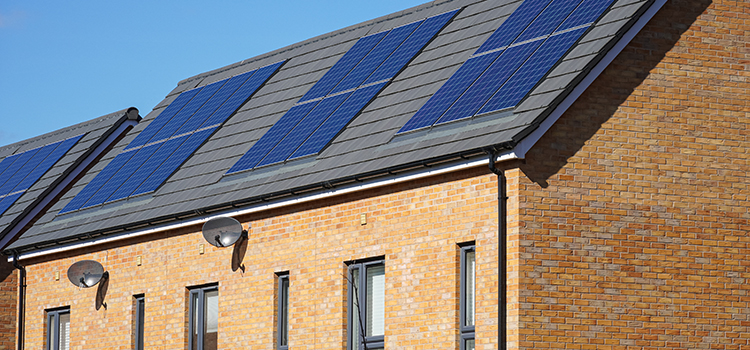
Not every resident has access to a rooftop that's suitable for solar use. Multi-Occupant Solar allows residents of multifamily properties to share a solar array located on or near the property.
Rather than installing individual solar systems, participating customers can benefit from a shared solar array that serves their property or housing community.
How Multi-Occupant Solar works
Multi-Occupant Solar allows multiple electric accounts on the same, or contiguous, property to share a single solar array. This can be a good option for places like apartment buildings, condominiums, manufactured home communities, farms, or Tribal properties where several customers can participate in one solar project.
How crediting works:
- The solar array generates electricity.
- That electricity is used first by a property meter, often a house meter that serves common areas, shared facilities or other property needs.
- Any electricity that isn't used on-site is exported to the grid.
- This exported energy generates bill credits, which are automatically distributed to allocated customers.
Currently, exported solar generation is credited at $0.067 per kilowatt-hour (kWh).
To participate, the solar array must be located on the same property as the participating customer accounts or on a contiguous property. For projects owned by Tribal Nations, allocated customers may be located anywhere on Tribal land.
-
Types of customers
There are two types of customers involved:
Primary customer
The primary customer owns or manages the solar project. They are responsible for assigning how financial credits from exported energy are shared among allocated customers.Allocated customer
An allocated customer is a participating electric customer that receives a portion of the solar project's exported energy credits on their monthly bill. -
Eligibility requirements
Multi-Occupant Solar is available to customers on residential and commercial electric service Rate Schedules 7-49. It is not currently available in combination with:
- Time of Use Rate Schedules 307, 327 (limit only affects Primary customer)
- Non-Communicating Meter Service Schedule 171
Solar systems can be up to 1000 kW of installed capacity.
Before participating in Multi-Occupant Solar, your system must be reviewed and interconnected with PSE through the Schedule 152 Interconnection process.
Is Multi-Occupant Solar right for you?
Multi-Occupant Solar may be a good fit if you:
- Live in a condominium, apartment or townhome community
- Want to access solar energy without installing a private system.
- Prefer a shared approach to solar generation
Because these projects serve multiple residents, they typically require coordination at the property or community level, such as:
- HOA or condominium association
- Property management company
- Cooperative housing board
- Community association leadership
These groups can help evaluate interest, coordinate with residents, and explore whether a shared solar project may be a good fit for the property.
-
Enhanced Incentives for affordable housing providers and Tribes
Affordable housing providers and Tribal entities may qualify for enhanced incentives that help reduce the upfront cost of installing a Multi-Occupant Solar project. Eligible projects can receive funding of up to 100% of project costs or $250,000, including up to $50,000 for interconnection costs.
Incentive applications are reviewed monthly and prioritized based on how much of the project's financial benefit will be passed on to low-income households or Tribal members. Previous recipients of solar grants or incentives are welcome to apply.
To qualify, projects must:
- Have at least 50% of units occupied by low-income households or Tribal members.
- Be located within PSE's electric service area.
- Be owned by the applicant or have at least five years remaining on the site lease.
- Participate in the Multi-Occupant Solar program.
- Complete Schedule 152 interconnection requirements and receive permission to operate.
- Complete installation within 12 months of the agreement being signed.
- Meet minimum solar site criteria, including a 75% Total Solar Resource Fraction (TSRF).
-
Interested in bringing Multi-Occupant Solar to your property?
The first step is to talk with the people who help manage your community. Your HOA, property manager, housing provider or community association can assess interest, explore project feasibility and work with a qualified solar installer to evaluate options.
Multi-Occupant Solar projects must complete PSE's Schedule 152 interconnection process before operating with the electric grid.
-
Looking for other ways to tap into solar?
Multi-Occupant Solar isn't the only way to benefit from shared solar generation. If your property doesn't currently have a solar project, you may be interested in Community Solar.

Have questions about PSE's Multi-Occupant Solar program and how to get started? We're here to help.

WANT TO INSTALL SOLAR?
Find a PSE Recommended Energy Professional (REP) if you want to learn more about solar or other green options for your home.

MULTI-OCCUPANT SOLAR ENHANCED INCENTIVES
Enhanced incentives of up to $250,000 per project are available to reduce the upfront cost of installing a solar system. Affordable housing providers and Tribal entities are qualified and encouraged to apply.