


Please note: While PSE doesn’t currently offer V2X programs, you may complete the form at the bottom of this page to be notified when more information is available.
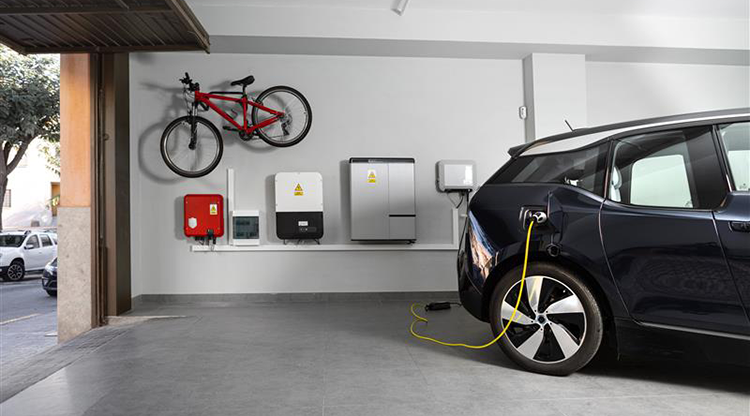
V2X: vehicle-to-everything
Demand for electricity is expected to increase significantly in the future, with electric vehicle charging forecasted to be 20% to 30% of total demand on the electric grid in 20 years.
Fortunately, EVs can also be part of the solution through V2X, or vehicle-to-everything. V2X is an opportunity for PSE and our customers to work together to meet rising demand for electricity.
What is V2X?
V2X (Vehicle-to-Everything), is a technology that allows for the bi-directional flow of electricity stored in the batteries of compatible EVs to power buildings, homes, and even the electrical grid.
V2X is an umbrella term that describes the technology such as vehicle -to-grid (V2G), vehicle-to-buildings (V2B), vehicle-to-home (V2H), or other vehicles.

V2H = vehicle-to-home
- What is V2H: V2H technology transforms your EV into a powerful energy resource for your home.
- How it works: Using bidirectional charging capabilities, V2H allows your EV battery to supply electricity back to your house when needed. Your EV can charge during off-peak hours when electricity is cheaper on a Time-of-Use rate, then power your home during peak periods or outages.

V2B = vehicle-to-building
- What is V2B: V2B technology transforms your EV into a power energy resource for your building.
- How it works: Using bidirectional charging capabilities, V2B allows your EV to supply electricity back to your building when needed. Your EV can charge during off-peak hours when electricity is cheaper on a Time-of-Use rate or mitigate demand charges, then power critical loads in your building during peak periods or outages.

V2G = vehicle-to-grid
- What is V2G: V2G technology transforms your vehicle into a distributed energy resource on wheels to help stabilize the grid.
- How it works: Using bidirectional charging capabilities, V2G allows your EV to supply electricity back to the grid when needed. Your EV can serve as a critical grid resource to balance peak demand and provide additional capacity.
He aquí un vistazo rápido a PSE V2X
Muchos vehículos eléctricos pueden hacer más que conducir. Con la tecnología V2X (Vehicle-to-Everything), los vehículos eléctricos y los cargadores bidireccionales compatibles pueden alimentar hogares y edificios, mantener la red, proporcionar energía de respaldo y ayudar a crear un futuro energético más confiable y
sostenible.-
How V2X works
V2X allows battery-only electric vehicles to act as distributed energy resources, helping to reduce demand on the electric grid.
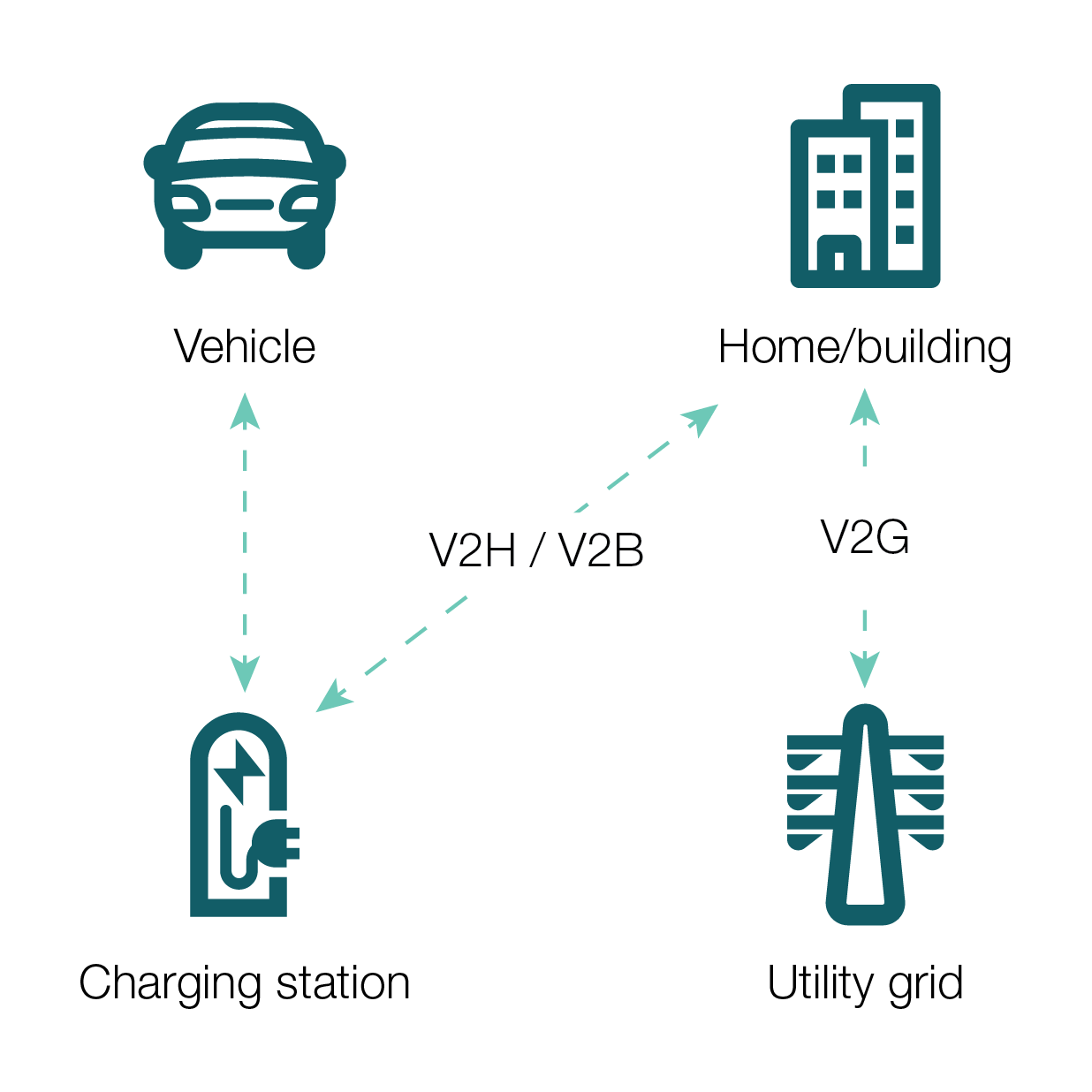
- Bidirectional charging: electricity flows both to and from the vehicle in order to contribute excess energy back to the electric grid during high-demand periods or to homes and buildings in times of need.
- Grid support functionality: the vehicle acts as a mobile battery storage system, supporting the electric grid during peak demand and enhancing reliability.
- Smart charging infrastructure: integration with smart charging systems allow for optimized vehicle charging schedules based on time-of-use rates, energy demand and more.
-
The benefits of V2X
In support of PSE’s Transportation Electrification Plan, we’re exploring the best ways to utilize V2X for the benefit of the electric grid and our customers. Those benefits include:
- Lower fuel expenses for commercial and residential customers
- Potential compensation for customers participating in vehicle-to-grid programs
- A more resilient and robust energy grid
- Backup power for homes and buildings
- Support for greener and more sustainable transportation
-
V2X and Interconnection
- What is Interconnection? Interconnection is the process of connecting any potential energy source to a home that operates in parallel with the PSE grid, transforming any device into an integrated part of a home's energy ecosystem and the broader clean energy grid.
- Why is Interconnection Critical for V2X? Proper interconnection is essential for V2X technology to function safely and effectively. It ensures that:
- EVs can supply power during outages or peak periods
- Excess energy from vehicles can flow back to the grid when beneficial
- Maintain access to reliable grid power when EV battery is low
- All energy transfers happen safely without risking damage to equipment or the electrical system
- How Interconnection Works with V2X:
- Draw power from the PSE grid to charge EVs during off-peak hours
- Supply power from an EV battery to a home during outages or expensive peak periods
- Send excess energy back to the PSE grid when an EV is fully charged and home energy needs are met
- Automatically switch between these modes based on energy needs, time-of-use rates, and grid conditions
- Key Benefits:
- Reliability: Never lose access to grid power
- Flexibility: Optimize when and how energy is used based on cost and availability
- Safety: Proper interconnection protects home, vehicle, and the broader electrical system
- Grid Support: Contribute to a cleaner, more resilient energy future

Preguntas frecuentes sobre V2X
¿Cómo ayuda V2X a la red eléctrica?
V2X puede ayudar a proporcionar energía de respaldo durante las interrupciones, equilibrar la demanda de la red, respaldar la integración de la energía renovable y reducir la tensión durante los períodos de mayor uso.
¿Cómo participo en V2X?
Si bien PSE no ofrece actualmente un programa V2X, puedes registrarte para recibir una notificación cuando haya más información disponible mediante el siguiente formulario.
¿Cómo interconecto mi equipo V2X?
La tecnología V2X es nueva y cambia rápidamente, por lo que nuestros procesos pueden cambiar, pero puede comenzar con más información sobre la interconexión y completar una solicitud en nuestra página de energías renovables distribuidas.
¿El V2X es seguro para la batería de mi vehículo?
Los sistemas V2X están diseñados teniendo en cuenta la conservación de la batería e incluyen protecciones para evitar una descarga excesiva o daños a la batería del vehículo. Asegúrate de revisar la garantía de tu vehículo para conocer las limitaciones relacionadas con el V2X.
¿Cuándo suministraría mi vehículo energía a la red?
Por lo general, su vehículo suministraría energía a la red durante los períodos de mayor demanda cuando el sistema eléctrico está sometido a una gran presión. Tu vehículo también puede suministrar energía durante las emergencias de la red, lo que ofrece un valioso apoyo cuando el sistema eléctrico necesita recursos adicionales.
¿Tendré siempre suficiente carga para mis necesidades de conducción?
Los programas V2X siempre permiten a los participantes establecer niveles mínimos de carga e indicar cuándo necesitan que sus vehículos estén completamente cargados.
Stay informed on V2X programs
Complete this information request form to receive updates and more information on PSE V2X programs.

Have questions about V2X?
Reach out to us at v2x@pse.com. Or, fill out the information request form at the bottom of this page.